Tongariro Alpine Crossing from Ohakune
Discover the beauty and cultural significance of the Tongariro Alpine Crossing. Learn about safety, planning your hike, and convenient shuttle options from Ohakune while staying at Two Rivers Ohakune.
Walking the Tongariro Crossing from Two Rivers Ohakune
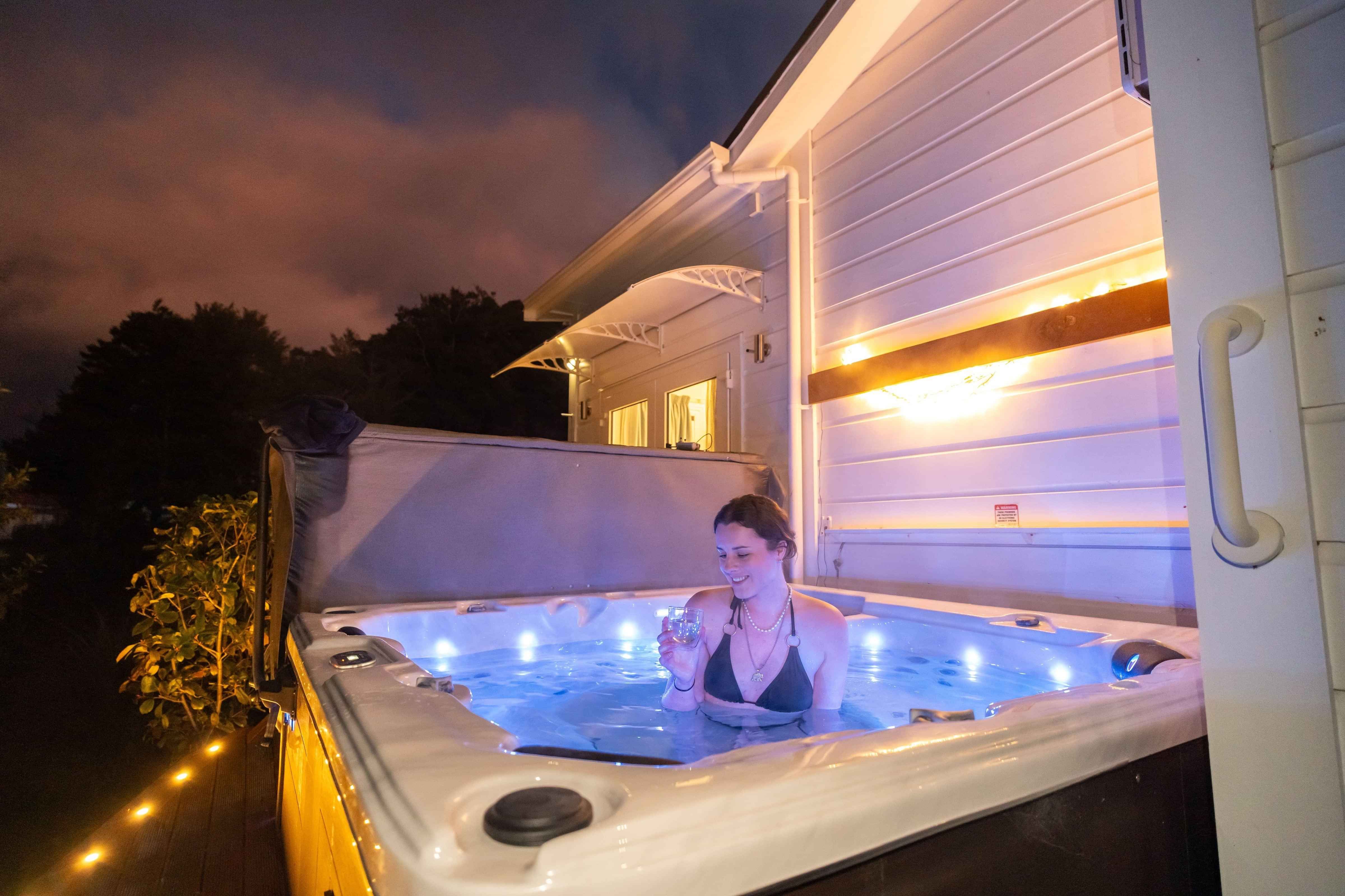
After eight hours on volcanic ridgelines, there's something deeply satisfying about slipping into a private hot tub while listening to the rivers below.
Two Rivers Ohakune is a beautiful bnb where you fall asleep to the sound of a river and wake up to beautiful fields and hills outside your window. The bed was very comfortable; the room was spotless ... I stayed here while doing the Tongariro Alpine Crossing, and the hot tub after the hike is perfect. The hosts are very responsive and gave helpful tips for restaurants and for the hike.
KW3503, Texas, 12/05/2025
Why stay in Ohakune for the Tongariro Alpine Crossing?
“Ohakune is the southern gateway to Tongariro National Park and easily its most charming. In winter it hums with energy, its chalets and bars filling with skiers using it as a base for Tūroa up the mountain. Come summer, the town shifts gears into a relaxed hub for hikers and cyclists exploring the park.”
Verve Magazine — Tongariro National Park
Quoted with permission
~ Restaurants, cafés and everything you need nearby
~ A relaxed mountain town away from the busiest Crossing gateways
~ Direct Tongariro Alpine Crossing shuttle from Ohakune
~ A restorative, quiet environment before and after the walk
~ Private, luxury accommodation and hot tubs at Two Rivers
Why stay at Two Rivers Ohakune?
Sleep well beside the rivers before your adventure. Take breakfast in your suite, catch a local shuttle and spend the day among the volcanic landscapes of Tongariro. Afterwards, return to Two Rivers for a long hot shower, dinner in Ohakune, and then sink into your private hot tub as the rivers flow gently below. Let the warmth ease tired muscles while the sounds of the river replace the bustle of the day. Then simply rest and let the day's adventure settle into memory.
Two Rivers offers far more than a place to stay. It's the comfort, privacy and luxury that bookend your Tongariro Crossing adventure that make a stay here truly unforgettable.
Whether you're planning months ahead or checking conditions before your walk, these guides will help you prepare for one of New Zealand's most remarkable alpine experiences.
Our guide to one of New Zealand's great alpine adventures
Staying in Ohakune for the Tongariro Alpine Crossing
A landscape of remarkable beauty
Respecting the mountains
The weather: prepare for an alpine environment
Before you walk the Tongariro Alpine Crossing
Tongariro Alpine Crossing transport options
Sustainable Travel in Ruapehu
What if the weather isn't suitable?
A Peaceful Riverside Base
The Tongariro Alpine Crossing needs little introduction. Its route through the volcanic heart of Tongariro National Park takes you across a landscape shaped by volcanic forces, Māori history and the ever-changing moods of the Central North Island.
Ula and I first saw the mountains of the Central Plateau in January 2012, when we travelled from Wellington to Taupō. On a beautiful summer's day, their majesty was revealed almost instantly. Even with summer warmth in the air, the snow-covered summit of Mt Ruapehu hinted at the scale and grandeur of these remarkable mountains.
It was not until January 2021 that we completed the Tongariro Alpine Crossing ourselves, but it remains one of those days that is still vivid in our family's memory. The sense of achievement, the changing landscapes and the sheer beauty of the volcanic environment created an experience we continue to treasure.
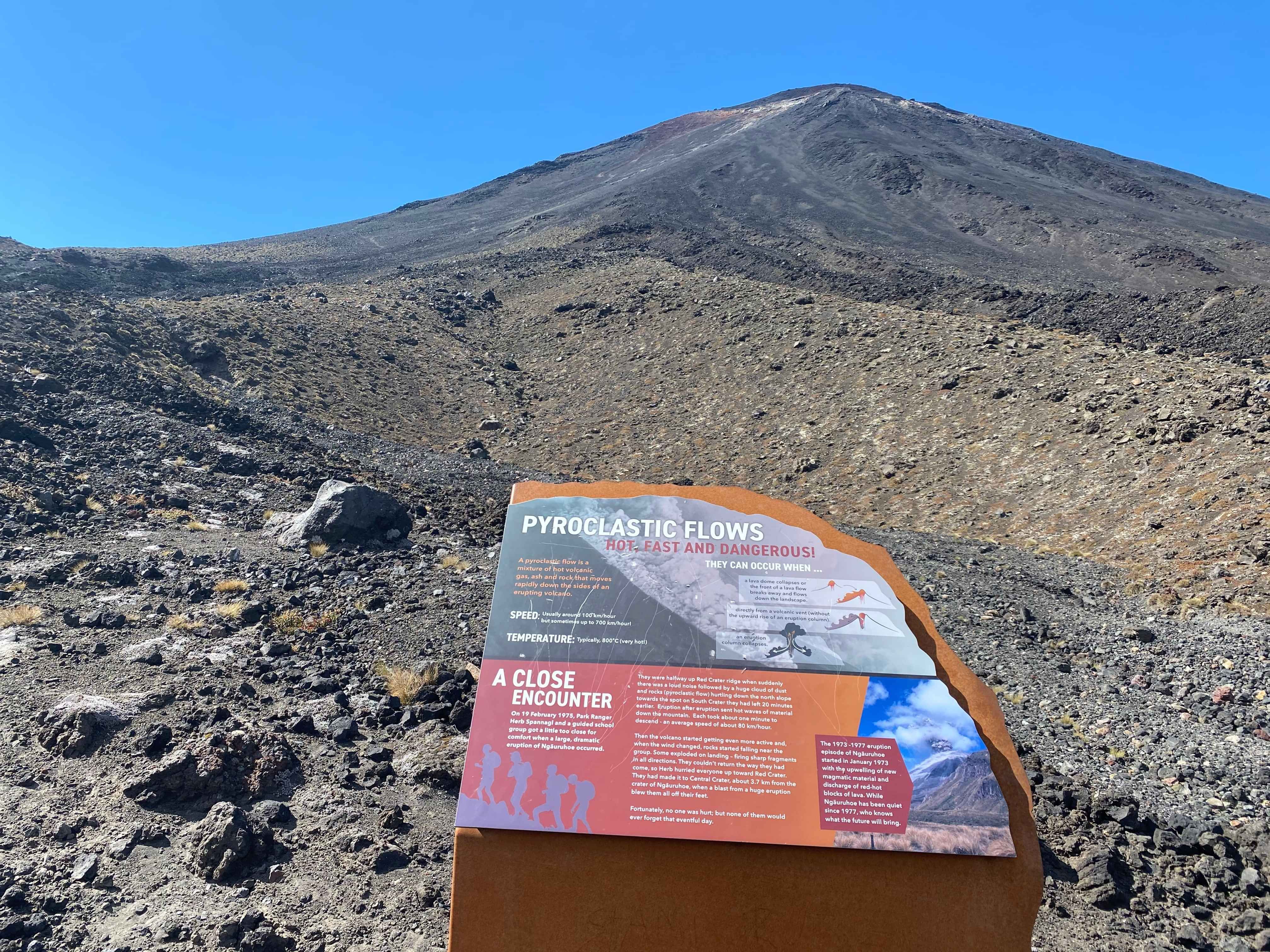
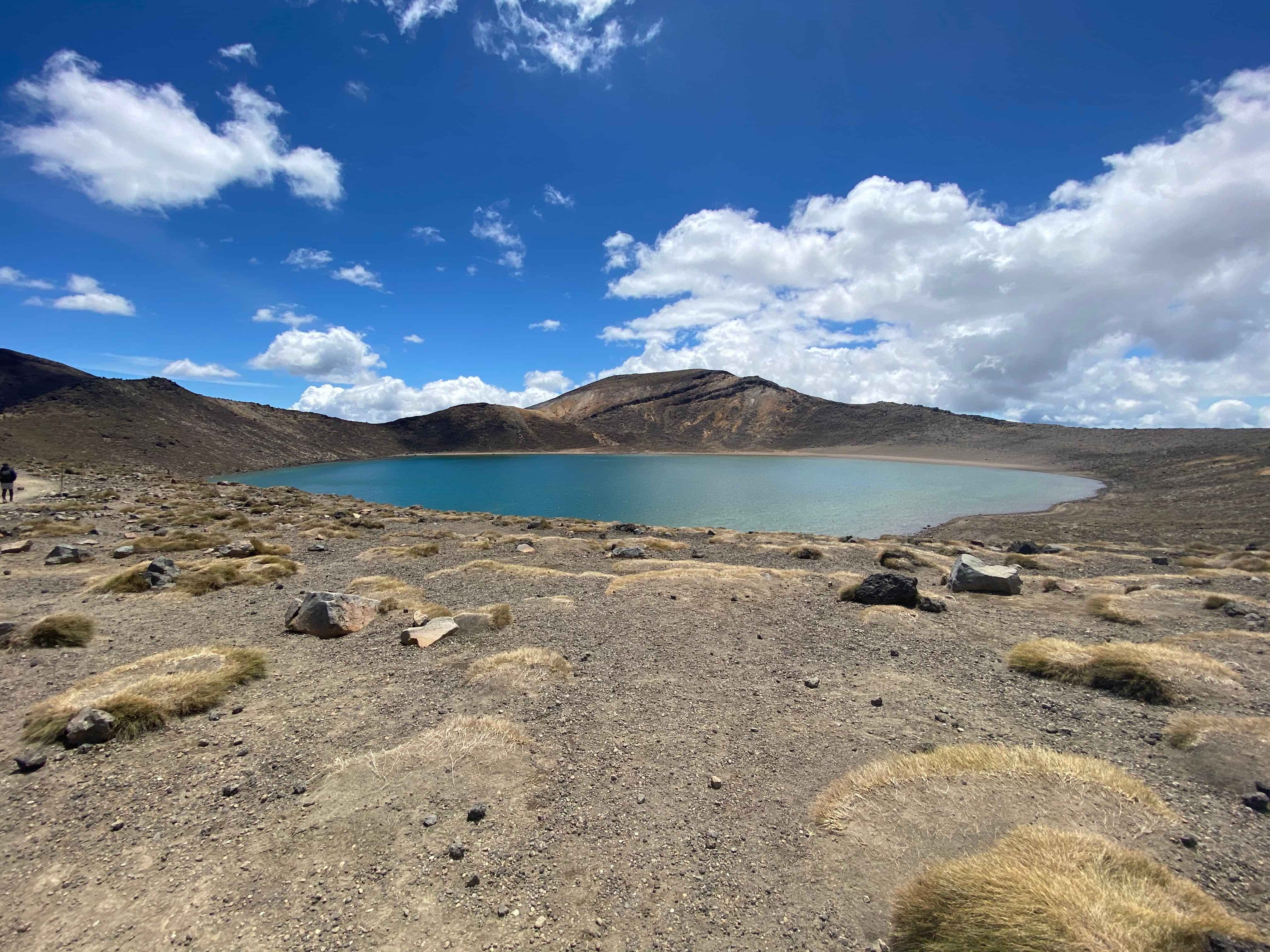
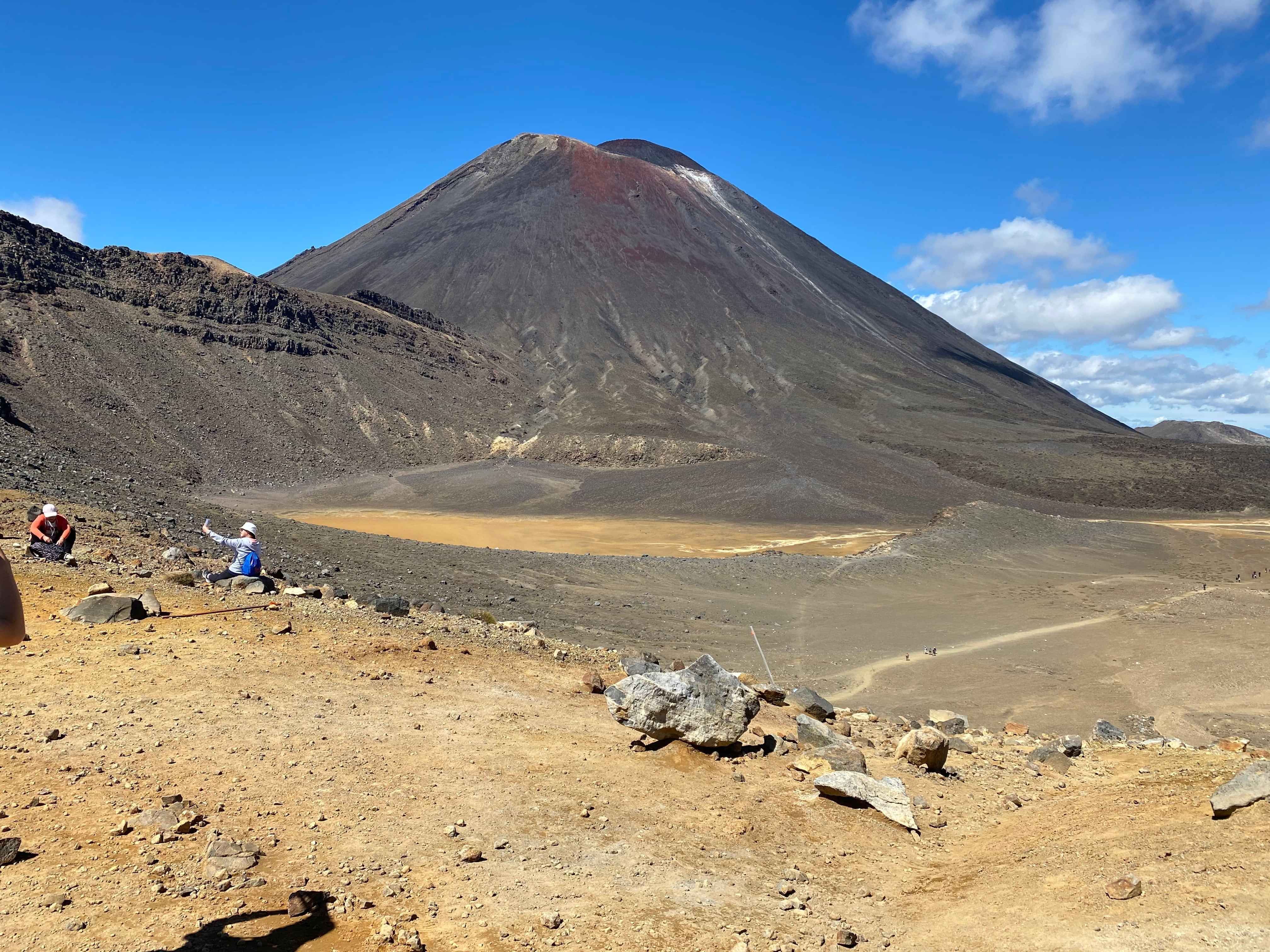
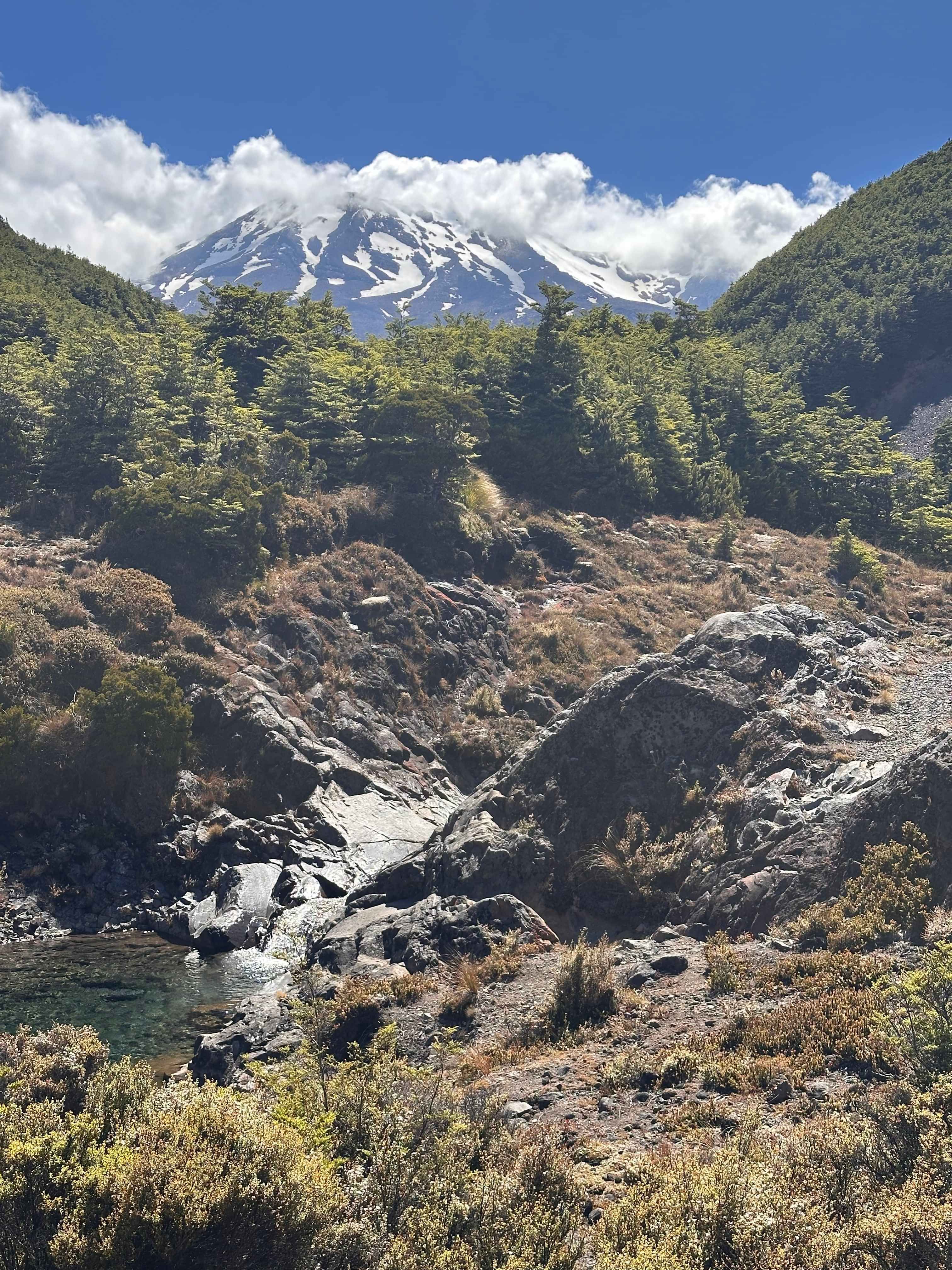
The photographs on this page were all taken by Ula and me during that first Crossing.
Each photo represents a place where we stopped in awe, amazed by the surrounding vistas. Educated as a physical geographer, I thought I knew what to expect. Nothing prepared me for the wide open landscapes, vivid colours and aromas. The photos do not pay full homage to the experience.
Whether you're visiting New Zealand from overseas or exploring your own backyard, the Crossing offers a rare opportunity to experience a place that is both breathtakingly beautiful and deeply significant.
At Two Rivers we'd like to help you with your adventure...
Our three private suites provide a quiet place to rest before an early start and somewhere peaceful to recover afterwards.
Ohakune is one of the closest towns to Tongariro National Park. On the edge of town, Two Rivers Ohakune offers accommodation near the Tongariro Alpine Crossing. Shuttle services are available within easy reach of Two Rivers, taking you straight to the start of the crossing, while local cafés, restaurants and outdoor services are also close by. And at the end of the day, you have a peaceful place to return to after time in the mountains.
Two Rivers is at 44 Burns Street, Ohakune, beside the Mangawhero and Mangateitei rivers. We are just a short walk from the village and approximately 30 minutes by road from the Tongariro Alpine Crossing trailhead.
We're also happy to share our local knowledge, including advice about shuttle services, weather, alternative walks and places to eat. You may find our Frequently Asked Questions page is helpful.
We invite you to discover the benefits of booking direct with Two Rivers
The Tongariro Alpine Crossing traverses the heart of Tongariro National Park, New Zealand's oldest national park and a UNESCO World Heritage site recognised for its exceptional natural, cultural and spiritual significance.
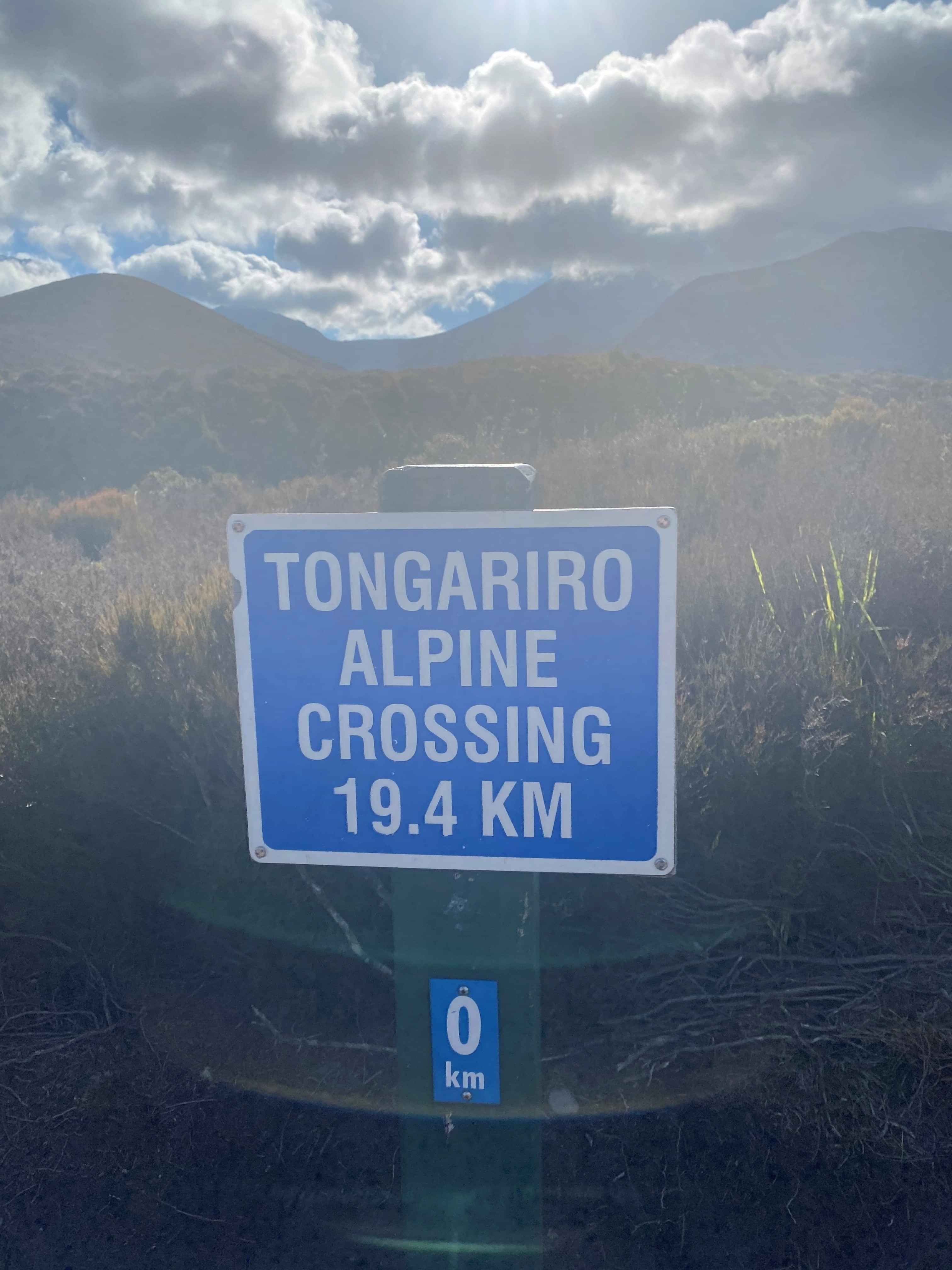
The walk begins at approximately 1,120 metres above sea level in the Mangatepōpō Valley. From there, the track climbs steadily through an increasingly dramatic volcanic landscape.
Along the way you'll encounter ancient lava flows, volcanic craters, steaming vents and striking alpine vegetation before reaching the spectacular Emerald Lakes. The highest point of the Crossing is Red Crater, which can be quite windy, at approximately 1,886 metres.
The descent from Red Crater brings you onto steep volcanic scree before continuing past the Emerald Lakes and Blue Lake. We recommend caution at this point, as the scree is very loose and it's easy to slip or fall. From there, the track gradually descends the northern slopes of Tongariro before eventually reaching Ketetahi Road.
The scenery changes constantly throughout the day. On clear days, views extend across Lake Rotoaira and Lake Taupō, while Mt Ruapehu and the wider Central Plateau provide a spectacular backdrop.
It is a landscape that can feel almost otherworldly.
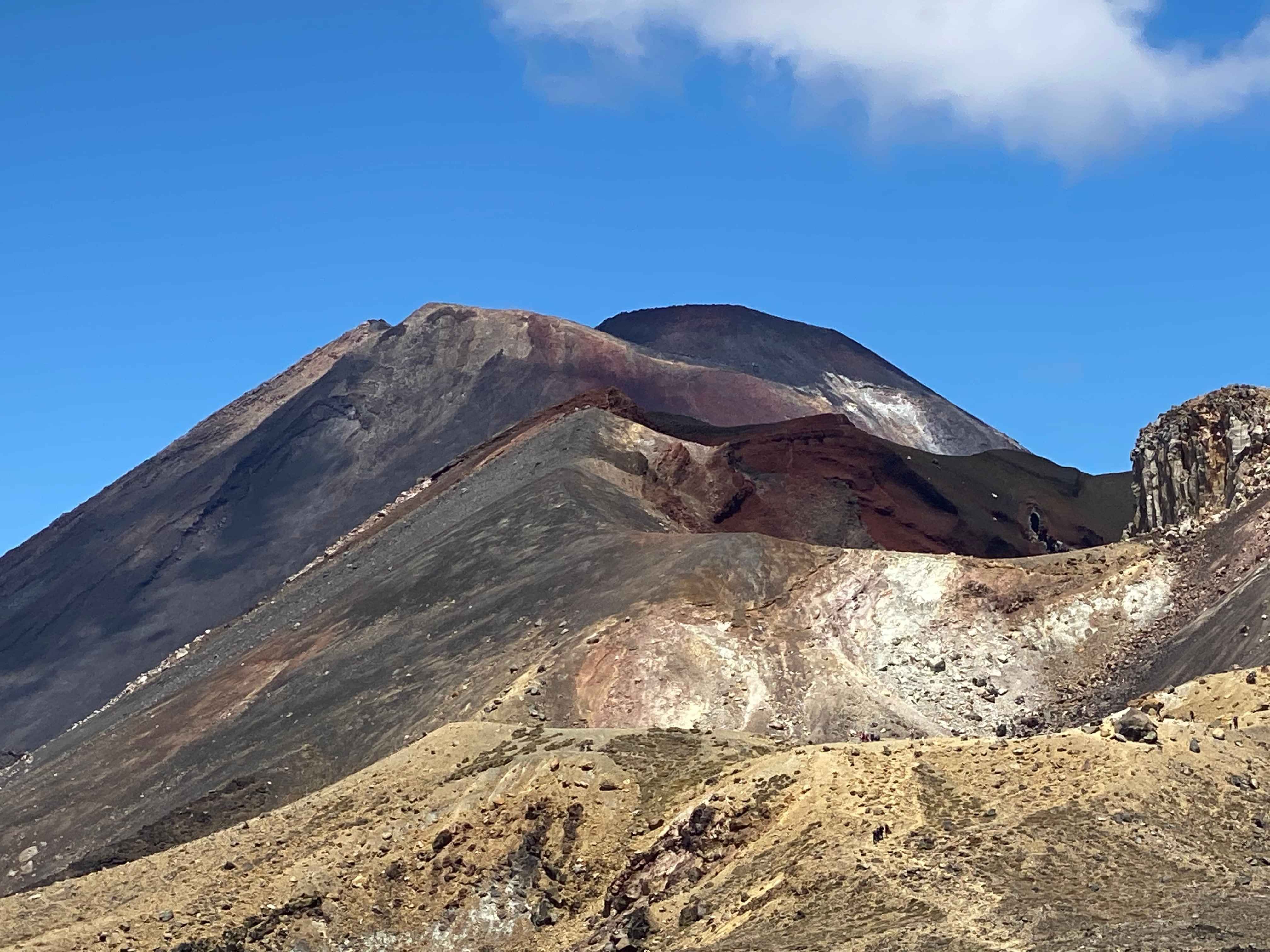
As visitors, we are privileged to travel through this special place.
Tongariro is not simply a spectacular landscape. The mountains and waterways have deep cultural and spiritual significance to Ngāti Hikairo ki Tongariro of Ngāti Tūwharetoa, who are kaitiaki - guardians - of Tongariro.
Visitors are asked to respect the cultural significance of the maunga by staying on the marked track, taking all rubbish away and treating the landscape with care.
In particular, the alpine lakes and waterways are sacred. Please do not touch or enter the lakes or other waterways.
For many people, the mountains are also a place of personal reflection and spiritual meaning. Taking the time to understand something of that significance can add another dimension to the experience.
Tongariro National Park holds UNESCO World Heritage status for both its natural and cultural values, reflecting the extraordinary combination of volcanic landscapes, biodiversity and cultural heritage found here.
One thing that can surprise visitors is just how genuinely alpine the Tongariro Alpine Crossing is. Much like the Rockies or the European Alps, conditions can change quickly and dramatically. Even in summer, strong winds, heavy rain, poor visibility and very cold temperatures are possible. Snow can fall at any time of year.
Locals sometimes talk about experiencing four seasons in one day. On the mountains, that isn't an exaggeration.
The weather at the car park when you start walking can be very different from the conditions around Red Crater several hours later. That's why preparation matters. Always check the latest weather forecast and current track information before setting out. During the summer hiking season, DOC also operates a daily “Not Recommended Today” advisory when forecast conditions reach potentially hazardous levels.
If conditions aren't suitable, don't be tempted to push on simply because you've already arranged your transport.
The Crossing has a very different character depending on the season.
Summer
From roughly November through April, the longer daylight hours and generally more settled conditions make this the main season for most independent walkers. That doesn't mean summer conditions are guaranteed to be easy. The track is exposed, the weather can deteriorate quickly, and the walk is long and physically demanding.
Autumn and spring
These seasons can be beautiful, with crisp air, fewer people and spectacular visibility. They can also bring rapidly changing conditions, including snow and ice at higher elevations. Treat the mountains with the same respect you would give them in winter.
Winter
From May through October, the Tongariro Alpine Crossing becomes a serious alpine undertaking. Snow, ice, avalanche terrain, sub-zero temperatures and poor visibility can all be present. DOC advises that special alpine skills, equipment and experience are required during this period.
For most visitors, we strongly recommend using a professional guiding company for a winter Crossing rather than attempting it independently.
A guide can provide the specialist knowledge, equipment, route-finding skills and judgement required for changing alpine conditions. Winter shuttle services generally do not operate in the same way as they do during the main walking season, so transport also needs to be considered carefully.
If you are not an experienced winter alpine walker, there are many safer ways to experience Tongariro National Park during the colder months.
One lesson we learned ourselves is that the Crossing feels much bigger than its approximately 20 kilometres might suggest.
It is a full day in a genuine alpine environment, with substantial climbing and a long descent. A reasonable level of fitness is important, and you should allow plenty of time rather than treating the published walking time as a target.
We recommend:
~ Check the latest weather forecast and current track information before you leave.
~ Check the DOC information and complete the Tongariro Alpine Crossing booking process before arranging your transport.
~ Remember that a booking is needed when using a shuttle or guided walk service.
~ Wear sturdy hiking footwear with good grip. Take walking poles if you normally use them. Equipment can be hired locally.
~ Carry warm and waterproof layers regardless of the forecast.
~ Bring sunscreen, sunglasses and a hat. There is very little shelter on much of the alpine section.
~ Carry plenty of food and water. DOC recommends taking 2–3 litres of water. The water found along the track is not suitable for drinking.
~ Take a fully charged mobile phone and consider carrying a power bank.
~ Allow more time than you think you will need.
~ Make sure your fitness and experience are appropriate for a long, exposed alpine walk.
~ Stay on the marked track and follow all DOC safety advice.
~ Never enter or touch the alpine lakes or waterways.
~ If conditions deteriorate, be prepared to turn around.
And one final piece of advice from our own experience:
Don't underestimate the descent.
By the final few kilometres, many walkers discover muscles they didn't know they had. The long zig-zag sections and repeated steps can be surprisingly demanding on your knees and thighs.
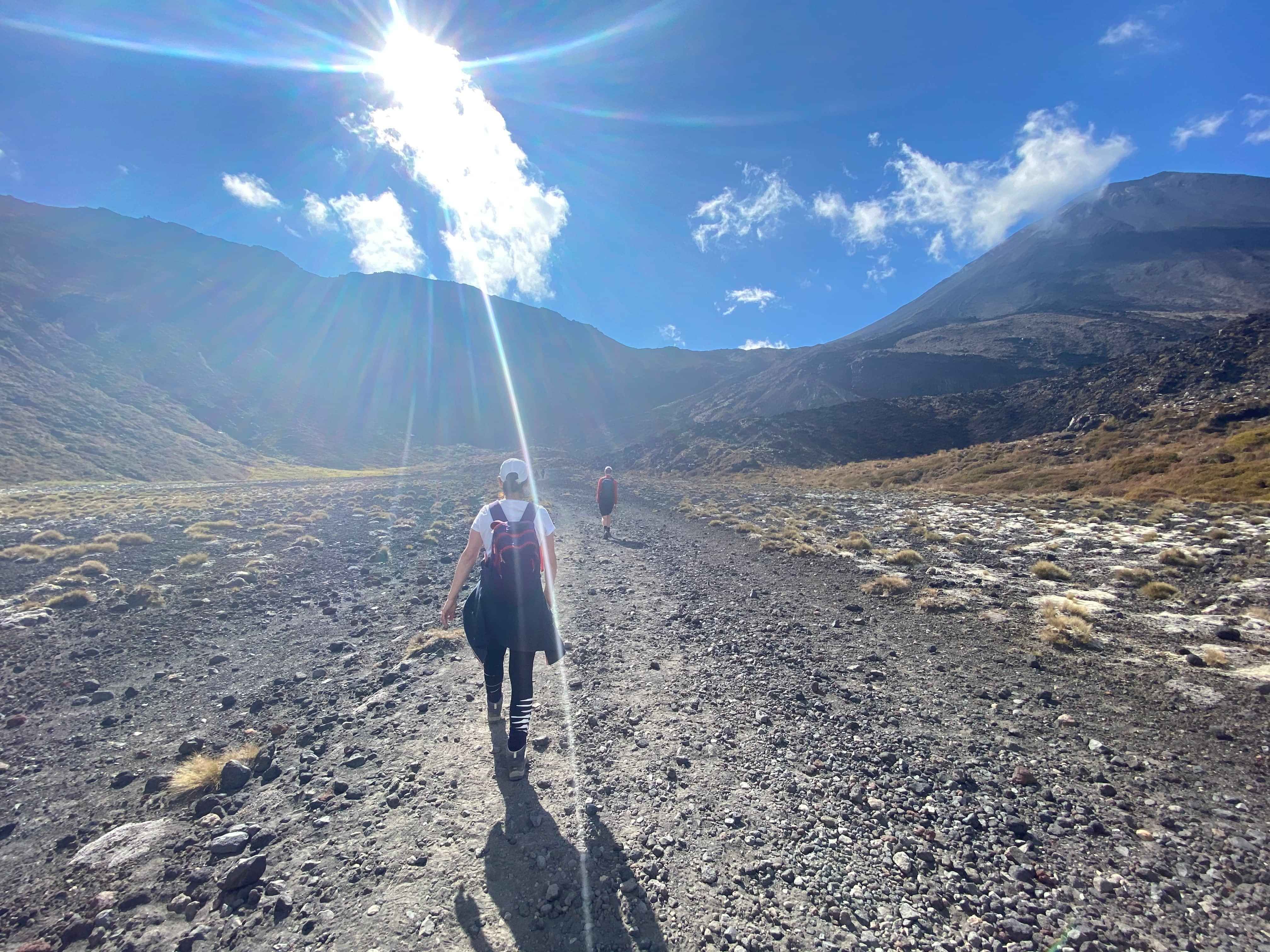
The Tongariro Alpine Crossing is a one-way walk, beginning at Mangatepōpō and finishing at Ketetahi. This makes transport an important part of your planning. For most visitors, arranging a shuttle is the simplest and least stressful option. It means you don't have to worry about moving a vehicle between the two ends of the Crossing, and you can concentrate on the walk itself.
DOC advises that there is no visitor parking at the Mangatepōpō car park during summer and recommends using shuttle transport.
"Is there a Tongariro Alpine Crossing Shuttle from Ohakune?"
One of the advantages of staying in Ohakune is the availability of local shuttle services. For guests staying at Two Rivers, Dempsey Buses are our preferred local shuttle operator to and from the Tongariro Alpine Crossing. They operate crossing services from the Ohakune area, with local pickups, during the walking season. Services depart Ohakune by around 7am. Advance booking is essential.
Transport arrangements change according to the season and operator availability, so we recommend checking the current information directly with the provider before travelling.
Sustainable Travel in Ruapehu
Environmental sustainability is something we care about personally. Our commitment to more sustainable tourism has been recognised with Qualmark Gold, and wherever practical we encourage guests to use shared transport such as local Crossing shuttles.
Sustainability extends beyond the environment. It also means supporting the people and businesses that help our community thrive.
At Two Rivers, we encourage guests to book directly with local operators whenever possible. Choosing local transport providers, activity operators, cafés, and other businesses helps keep more of your travel spending within the Ruapehu region, supporting local families and strengthening the community that makes this place so special.
Small choices can make a meaningful difference, helping preserve the character, resilience, and hospitality of our region for years to come.
When visiting Tongariro National Park, we also encourage guests to follow the principles of the Tiaki Promise - caring for people, place and culture while travelling through Aotearoa New Zealand. That means travelling safely, respecting the cultural significance of the mountains, staying on the tracks and leaving the landscape as you found it.
The Tongariro Alpine Crossing is spectacular, but it isn't the only way to experience this part of New Zealand.
If the weather forecast isn't suitable for the Crossing, don't feel that your day has been wasted. There are many other walks and experiences around Ohakune, Mt Ruapehu and Tongariro National Park, and we're always happy to suggest alternatives based on the weather and your interests. Depending on conditions, options can include shorter walks around the national park, the Taranaki Falls Walking Track or the Tama Lakes Track.
Sometimes the best mountain day is the one where you decide not to climb it.
A Peaceful Riverside Base
Our private suites provide a peaceful riverside base, with Ohakune village just a short walk away and the Tongariro Alpine Crossing easily accessible by local shuttle.
The Tongariro Alpine Crossing is one of New Zealand's great adventures. Choosing where you recover afterwards is just as important. At Two Rivers you'll swap crowds for birdsong, volcanic dust for warm water, and the exhilaration of the mountain for complete relaxation.
We invite you to discover the benefits of booking direct with Two Rivers
Stay at Two Rivers Ohakune
Read more about the Experience of Tongariro
Explore our accommodation
Regional Tourism Office Information - Visit Ruapehu
Important information
Mountain conditions can change rapidly. Information on this page is intended as a practical guide based on our experience and should not replace current information from the Department of Conservation, weather forecasts, volcanic alerts or professional mountain guides.
Always check the latest official information before setting out.
Author: Scott Tansley - Owner and Host at Two Rivers Ohakune
Published 14/8/26. Updated 17/09/26.