Tongariro National Park contains the sort of landscape that encourages ambitious itineraries.
There is the Tongariro Alpine Crossing to complete, Mt Ruapehu to explore, waterfalls to find, forest tracks to walk and photographs to take. For visitors travelling through New Zealand, all of this can easily become another list to fit between one destination and the next.
But Tongariro is not a landscape that always works to schedule. Mountain weather changes quickly. A clear morning can become cold, wet or windy, and the experience you had planned may not be the right one for that particular day.
Spending longer in the region does more than create additional time. It creates the freedom to respond to the mountain, explore beyond the best-known attraction and occasionally do very little at all.
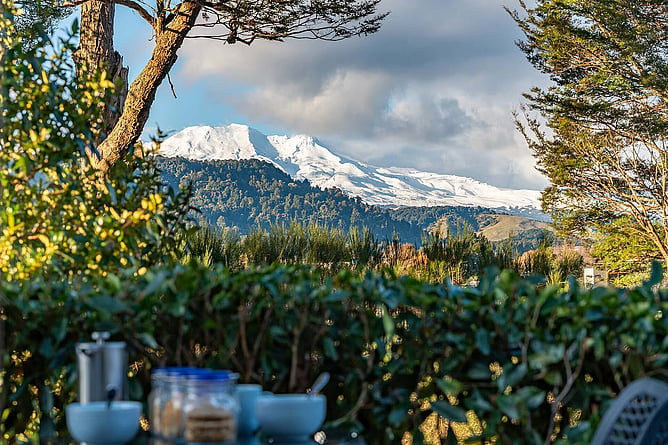
Give Tongariro more than one rushed day
Travel writer Athena Rhodes makes this point in The Green Travelling Guide to Tongariro National Park:
“Give yourself enough time to explore the area - a few days is better than one rushed day.”
Athena Rhodes - The Green Travelling Guide to Tongariro National Park
reproduced with permission.
That extra time can change the character of a visit.
Rather than arriving late, walking the Tongariro Alpine Crossing the following morning and immediately continuing the journey, you can settle into the region. You can choose the right day for a major activity, explore somewhere quieter on another, and leave room for the unexpected.
Slow travel does not mean avoiding adventure. It means allowing an experience to take the time it deserves.
Let the mountain help choose the day
The Tongariro Alpine Crossing is a remarkable journey through an exposed alpine environment. It is also weather-dependent, and conditions can change quickly.
A longer stay provides greater flexibility to select the most suitable day, although no itinerary can guarantee safe or favourable conditions. If the Crossing is not advisable, the region still offers native forest, waterfalls, cycling, shorter walks and time in Ohakune itself.
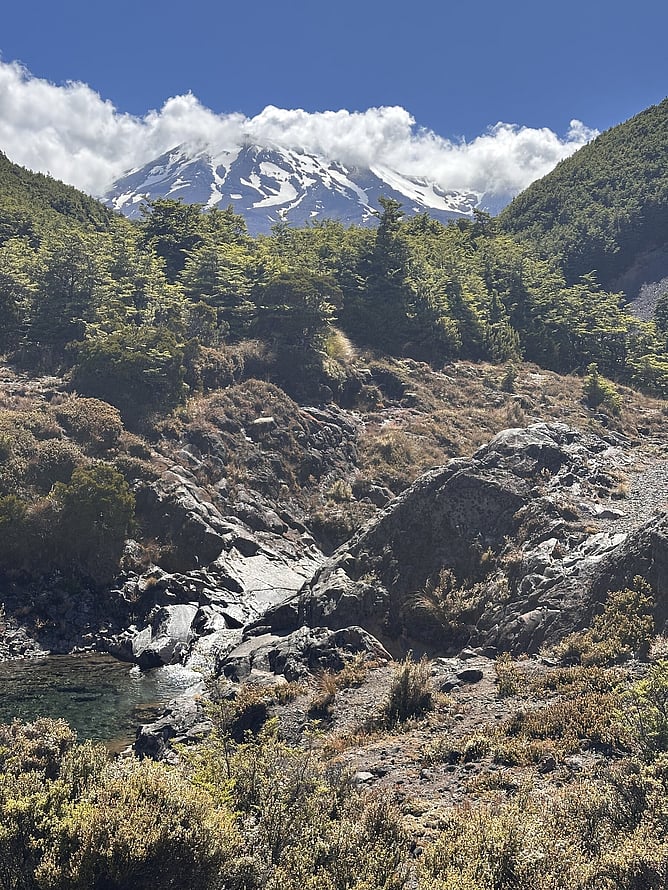
Sometimes, an enforced change of plan becomes a valuable part of the experience. After Tūroa closed during a recent stay, guest Cristina Allen reflected:
“Tūroa was closed during our time there, which was a bit of a blessing in disguise as we traded our snowboarding plans with a very much needed relaxing two nights at Two Rivers.”
Her experience captures something that is easily overlooked when planning a mountain holiday: rest does not have to be the consolation prize. Time to slow down, sleep properly and enjoy the setting can become one of the most memorable parts of the trip.
Our Tongariro weather guide brings together useful forecast and planning sources, so guests can make informed decisions as conditions change. Visitors should always check current conditions, use reputable shuttle or guiding operators where appropriate, and be prepared to change their plans.
Choosing not to enter an alpine environment in poor conditions is not a wasted day. It is a good decision - and often an opportunity to experience another part of the region. This could include a lazy hour at Ohakune Hot Tubs or a visit to the newly opened Ruapehu Distillery to try its award-winning gin.
Choose one meaningful experience
It is tempting to treat each day as space that must be filled. A slower approach begins with one experience that matters and lets the rest of the day develop around it.
That could be:
Completing the Tongariro Alpine Crossing when conditions are suitable.
Walking through native forest to Waitonga Falls.
Exploring the Mangawhero Forest and Rimu tracks.
Cycling part of the Mountains to Sea – Ngā Ara Tūhono network.
Exploring the Ohakune side of Mt Ruapehu.
Walking beside the rivers in Ohakune.
Enjoying a long lunch, good coffee or an unhurried evening meal.
One substantial experience leaves time to notice the journey around it: the changing forest, the sound of mountain water, the quality of the light and the way the weather moves across Mt Ruapehu.
It also leaves enough energy to enjoy the evening rather than simply recover from the itinerary.
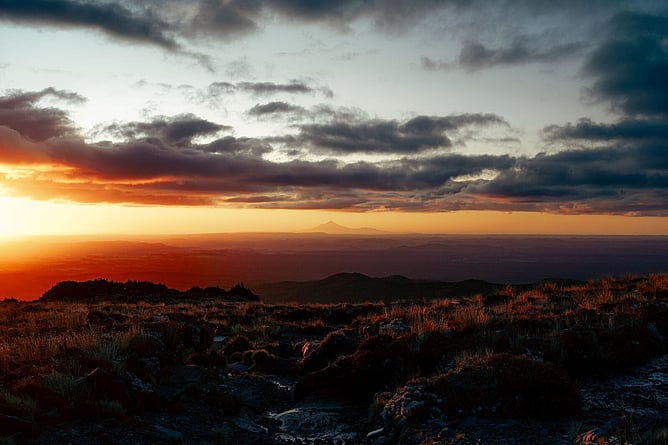
Explore the quieter southern side of the park
The Tongariro Alpine Crossing is internationally recognised, but it represents only one part of the national park.
Ohakune sits on its southern side, close to native forest, rivers, waterfalls and the volcanic slopes of Mt Ruapehu. Walks such as Waitonga Falls, Mangawhero Forest Walk and Rimu Walk offer different encounters with the landscape, often without the scale and intensity of the Crossing.
Some experiences take only a short time. That does not make them less worthwhile. A gentle forest walk, a waterfall or an hour beside the river can be the part of a journey that remains most vivid.
Our Experience Tongariro guide introduces activities across Ohakune, Ruapehu and Tongariro National Park, while our guide to the Tongariro Alpine Crossing from Ohakune explains the practicalities of using the town as a base.
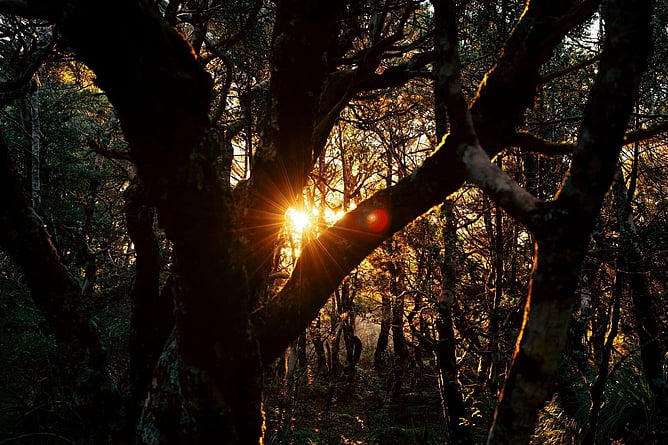
Allow time for Ohakune itself
Ohakune is sometimes treated simply as somewhere to sleep before the next activity. Staying longer allows the town to become part of the experience.
Cafés, restaurants and local businesses provide a welcome contrast to days spent outdoors. The riverside and forest walks offer gentler ways to move through the landscape, while the town’s position makes it possible to explore different parts of the Central Plateau without changing accommodation each night.
There is also value in an evening with no further objective: walking into town for dinner, watching the light change on the mountain, or returning early and allowing tired legs to stop moving. Travel writer Petrina Darrah echoes this sentiment here,
“Ohakune really comes alive in winter, but I still enjoy the mountain resort feel of the town in summer. In the evening, you can watch the sunset light Ruapehu up in shades of red and gold.”
Petrina Darrah - A 3 week New Zealand road trip itinerary from Auckland to Christchurch reproduced with permission.
For travellers heading north or south through the North Island, Ohakune can be more than a convenient break in the drive. It can be the point where the journey slows down.
Make rest part of the experience
Rest is sometimes treated as the space between the memorable parts of a holiday. We think it can be one of them.
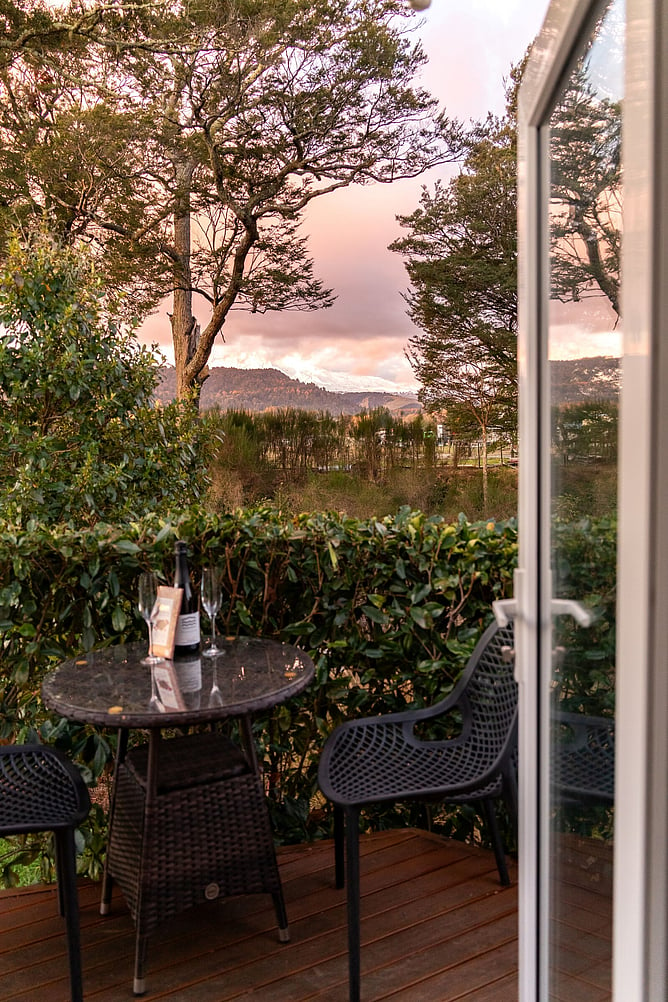
At Two Rivers Ohakune, our three adults-only suites sit beside the Mangawhero and Mangateitei rivers. The setting lends itself naturally to slower travel: breakfast in your suite, time on the deck, birdsong, flowing water and enough privacy to withdraw from a busy itinerary.
A recent guest described the balance we try to create:
“We felt completely at home here. The owners were exceptionally friendly and accommodating, yet pleasantly discreet and unobtrusive – just the right balance. We felt welcome without ever feeling disturbed.”
Sten A - TripAdvisor review, 26 October 2026
The Mangawhero and Rua Awa suites have private outdoor hot tubs, offering a welcome place to recover after hiking, cycling or skiing. Mangateitei provides a cosy base for travellers who prefer a simpler stay and the flexibility of a single night.
We are close enough to walk to Ohakune’s cafés and restaurants, while remaining tucked quietly beside the rivers. Guests can spend the day exploring and return to somewhere intended for rest, privacy and reconnection.
Stay long enough to remember it
Slow travel is not measured by the number of nights alone. A longer stay can still be hurried, and a short visit can still be meaningful.
The difference lies in leaving enough space to respond to the place itself.
Choose the experience that suits the conditions. Explore beyond the most famous track. Eat locally. Leave part of the day unplanned. Listen to the river. Notice the mountain when it appears.
Tongariro will still offer more than you can complete in one visit.
That may be a good reason to return.